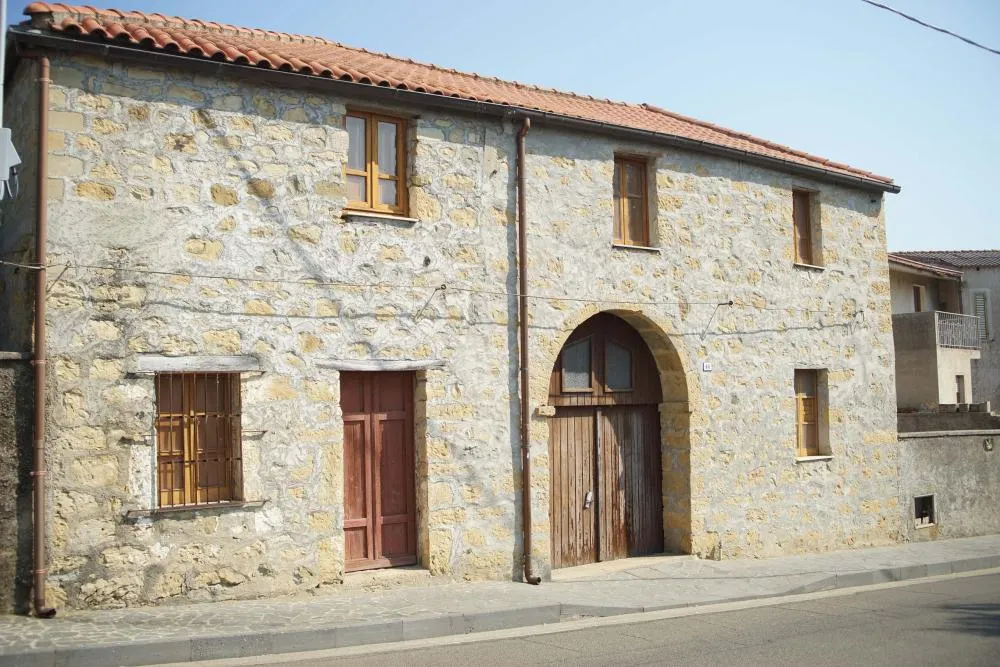
A portal with an archivolt of square stone ashlars opens directly onto the two-storey residence, made of small straw-coloured stones. There is also a pedestrian entrance.
The building was constructed in 1922 and was commissioned by Francesco Zuddas, who was the màistu de carrus (literally, master of carts) and whose workshop was an important resource for the town, where many owned oxen yokes.
Owning a cart and yoke in rural Sardinian society was the source of reliable income for a family, especially one of humble origins, and many aspired to possess one. Carts were used for every exigency, from transporting agricultural produce to going to hospital in the capital.
In 1821, there were as many as 58 working yokes in Simala but not every farmer owned one.
Carts were made from well-seasoned chestnut, elm and holm-oak wood. Each log had to be more than 5 metres long in order to be cut and left open along the middle to form a space for the planks that supported the sides. The wheels also had to be made of hard wood. Once, they were solid but were later replaced with spokes when a ruling of the Sardinian kingdom prevented the owners of vehicles with solid wheels from entering the cities of Cagliari and Sassari.